Saturday, March 23, 2019

Vindication for Fans, A Genuine Treat for Everyone Else: Review of SHAZAM (Spoilerfree)

Welcome Back to another edition of Comic Relief! where we talk about all the goings on in the world of nerd!

There are many ways I could start this review. I could talk about the pressure that was on this movie both from the past failed entries of the DCEU and the fact that it's sandwiched between 2 big Marvel films. However, that's not what I want to focus on, instead, I want to start with a personal statement. If you have read this blog at all, you probably realized that I am a pretty big fan of Superman. However, this love of the Man of Steel is relatively recent, however, there was always a character close to Superman that I had always enjoyed, the original Captain Marvel or Shazam. To me, I had always seen Shazam as the perfected vision of Superman: give all the power in the world with an adult man with his life in order, that story can suffer from stagnancy. However, if you take those powers, and you give them to a child with not a whole lot going for him outside a good heart and a desire to do the right thing, you have the potential for something great. In Captain Marvel/Shazam, there is something truly special, and this film did a tremendous job of showing just that.


A while back, I wrote a piece talking about my hopes and expectations for SHAZAM! and while one can hardly expect everything in a wishlist to be granted, this film came pretty damn close to granting every one. This movie is an absolute love letter to the character. Even though they have taken plenty of artistic licenses, there are several of nods and references to things that have been integral to the character in the past (the Tawny the tiger nod was probably my favorite, and also involves probably one of the best scenes of the film), however, while nods and easter eggs are great, that's not what makes this film as special as it is. This film probably has the most heart I have seen in a superhero film outside Spider-Man: Into The Spiderverse, it's fun from start to finish. Seeing Billy go from a loner to accepting his place as both a hero and a member of this new family was such a compelling ride. The humor is spot on and never feels forced, and the themes of family and acceptance that drive the film allow for some beautiful and tender moments. What's most impressive though is just how great the cast plays off one another. While Asher Angel (Billy Batson) does a phenomenal job in his own right, the dynamic between Zachary Levi (Shazam) and Jack Dylan Grazer (Freddie Freeman) will steal your heart as you watch the progression of their friendship throughout the film.


Captain Marvel or Shazam has been my favorite DC hero for quite some time, so it would have been hard to judge this film objectively for me, but the fact that I didn't have to, that this film was just that good is honestly a huge relief as a fan. While this film does have some minor problems (mainly in how it handles some of its visual effects), there are no gaping flaws in the movie to hurt anyone's enjoyment. All I can say is thank you to the director, David Sandberg, for not letting the fans down and for putting out one of the purest films of the genre. Thanks for proving me right, that there is something truly special about this character! (PS stay through the credits, while the post credit scene should be incentive enough, initial credits are so funny you'll kick yourself if you miss them). I would give SHAZAM! a 9.5/10, the movie delivers a fresh entry to the genre that handles the character origin in a unique way that leaves you wanting more!

This has been another edition of Comic Relief! I hope you have enjoyed and please do yourself a favor and if you see any movie in April before Endgame, make sure it's this one!

SHAZAM! opens in Cinemas April 6th.

Sunday, March 17, 2019

Victims of Causality: A Defense of Griffith and the Apostles

Welcome Back to another edition of Comic Relief! where we talk about all the goings on in the world of nerd!

With all the controversy going on about a certain movie that recently released, I am going to shift focus to get a break from all the negativity surrounding that controversy and shift to another topic that is probably equally controversial in its own right: "Griffith did nothing wrong." Now before I have a whole bunch of people jump down my throats, Griffith absolutely did a lot of things wrong, that is not the point of this piece. For those of you who are unaware Griffith is the lead antagonist of acclaimed manga Berserk. If you want more information on Berserk, please feel free to check out my Kingdom Sacrifice Born piece where I break down the dynamic between the characters Guts and Griffith, the series' protagonist and antagonist respectively. Anyways the point of this piece is to show that Griffith and his apostles are victims of causality (the major force at play in the story, manipulated by the Godhand of the eclipse), and that the choice of sacrifice is only presented when these characters are at their lowest points and feel they have no choice but to abandon their humanity to achieve their dreams and desires.


Now before we go any further, I have to explain the role of causality in the story of Berserk. Causality is similar to fate or destiny in Berserk, the only big difference is that it can be pushed and manipulated by the Godhand who are the 4 (or 5 after Griffith's fall) beings that hold sway over the demon world and offer the opportunity of sacrifice to humanity. The offer of sacrifice cannot happen for just anyone, they happen to those in possession of an item called a behelit (an odd bobble that is a malformed face on an egg) and the behelit can only activate the eclipse when the owner offers it their own flesh and blood. The activation of the behelit opens a pocket dimension to the godhand where the owner of the behelit is offered a chance to achieve their dreams, but only at the cost of great sacrifice. That being said let's delve in, and let me show you that contrary to popular belief, Griffith was once good as well as the other Apostles. In order to do that we are going to look at 3 characters from the pages of Berserk: The Count (the villain/Apostle of the Black Swordsman arc), Rosine the Queen of Fairies (the villain/Apostle of the Lost Children arc) and of course the Hawk of Light, Griffith (the antagonist of the entire story, and fifth member of the Godhand).

The first character we are going to talk about is The Count. While we never know the Count's actual name outside his title, we did get to know a bit about his backstory upon meeting his former torture master. While the torture master and physician, Vargas, confirms that The Count always had a penchant for cruelty, namely in his war against heretics, he was not always a dictator of his people and that the Count had a soft spot for his beautiful wife and daughter. However, during one of his raids against the Heretics, he made the worst discovery, his beautiful wife was participating in a heretic orgy. Hate and anger flowed through the count, and he wanted more than anything to kill her. However, he loved her too much, he just couldn't bring himself to do it, so he instead tried to kill himself. This event triggered the behelit and thus he sacrificed the woman who he loved but broke his heart in order that he could have the power to wipe the heretics from his land becoming the Slug Baron. However, it is interesting because despite his sacrifice, The count managed to retain some of his humanity through the love of his daughter, and we see that in his interactions with Guts.


During their altercations, Guts eventually meets The Count's daughter, Theresia, who had been placed under house arrest. It was revealed that this had been done by the count so that she would be spared to see her father's violence and malevolence. At the end of the day, he still loved his daughter and did not wish her to see him as a monster. Guts would use this against the count in their fight as he at one point grabs hold of Theresia as a human shield and The Count withdraws his attack. The wounds The Count sustains during the fight with Guts reactivate his behelit and the Godhand offers The Count more power if he were to sacrifice his daughter. However, a father's love is not so easily discarded and the Count refuses, which ultimately leads to his death at the hands of the Black Swordsman Guts. The count is only the first example of how these characters are the victims of causality, unfortunately, there is nowhere near as much information on him to go into too much depth on this outside of what we can see from the face value of his backstory. However, with Rosine, there is more than enough. 

Children are always the easiest to manipulate. They are naive and impressionable, which was why the poor Rosine was such an ideal candidate to push into making the sacrifice. Introduced in the Lost Children story of the Conviction arc, Rosine is the self-proclaimed Queen of the Fairies, and of all the Apostles in Berserk, she is my absolute favorite. Rosine was a child of war, her father was away during the 100-year war between the nations of Midland and Tudor. While away, Rosine's village was raided by enemy forces and her mother was raped. Upon the father's return, Rosine was born and there was always a question of whether or not she really was his daughter. As a result, Rosine grew up in an abusive home. Her father frequently beat both Rosine and her mother. However, while her home life may have not been ideal for Rosine, life wasn't all bad. She had her best friend, Jill, and the story of Peekaf for comfort. 


Rosine (left) and Jill

Peekaf was a local legend about a boy who grew up in the same village that was picked on because he looked like an elf. The Misty Valley nearby was where the Elves lived, and so Peekaf went to find them to be with his own. However, when he found the Elves they rejected him as well, telling Peekaf that he was not an elf, but instead was a child of two loving parents who had brought him to them when he was a baby due to being very sick. They healed him with their magic, and as a side effect he looked like an elf, but he never was. Peekaf, having realized his mistake in leaving his family, tries to return home, but time passes differently in the world of the elves, so when he returned he had found that a great deal of time had passed and along with it his parents. It's a sad story for sure, one that shouldn't give a child hope, but you see Rosine loved that story because she believed there was a different ending. Rosine believed that Peekaf found the elves, and with them, he found his new family and lived happily ever after. One day Rosine could take it no longer, so she ran away to the Misty Valley and be with the elves, like Peekaf. Only the thing about fairy tales is, that they are for children's imagination, the elves weren't there. She was out there for days until she was found by her parents. When her dad started beating her, he drew blood and when it spilled upon her behelit, the eclipse was activated and she was offered to be Queen of the Elves in exchange for the sacrifice, and she accepted.

After becoming Queen of the Fairies, Rosine would return to her village some nights, she would go to the children of the village and offer them a chance to fly like elves after killing their parents (because adults are bad), most children accepted and together they would play in the Misty Valley. By the time Guts gets involved, this has been going on for some time and the people of the town have grown fearful of elves, understandably so. Jill tells Guts about her missing friend and how she believes that the fairies are doing the bidding of her missing friend.  The Black Swordsman takes on the Elven apostle and eventually prevails, killing Rosine with his sword: Dragonslayer. On her final flight, Rosine thinks back to her family and like Peekaf did in the story she loved, feels regret for abandoning her family and her final thoughts are of a family dinner she shared with her mother and father, a warmer memory of a dark time.  

Rosine at family dinner while her wings break and she falls to her demise


With two out of three knocked out, we finally get to the main event: Griffith. Now without a doubt, Griffith's sacrifice was the most abhorrent, so let's start there and work our way back. Again I want to provide a disclaimer before I get started that again, this piece is in no way trying to justify his actions, nor is it to take away blame from his own personal choice to do it, it's to show that Griffith was coerced into making this decision through the machinations the Godhand put in place, in other words, he is the victim of causality. Griffith's sacrifice comes after he tries to kill himself due to being completely destroyed over the year of his captivity (we will discuss this more later). Upon activation of the eclipse, the Godhand provides him the offer of his dream and more, to not only have a kingdom but one that surmounts the world, however, a sacrifice must be made. Pulled in with him to the eclipse are the potential sacrifices, his mercenary band, The Band of the Hawk. He agrees to the sacrifice, and as a result, the members of the Band of the Hawk are all cursed with the brand of sacrifice and demons start hunting them down. The Band of the Hawk is massacred save two resilient members: Guts (the main character of the story and Griffith's only "true" friend), and Casca (the Band of the Hawk's female captain, and Guts' lover). Griffith, having gone through his own demonic transformation to the Femto (Hawk of Darkness), has demons hold down Guts while Griffith rapes Casca in front of him. Both Guts and Casca are rescued by the Skull Knight, and Griffith remains in the eclipse as a new member of the Godhand but is reborn into the physical world at the end of the Conviction Arc. These deeds are horrible, however, they are not really a particularly good reflection of who Griffith was, so without further ado let's talk about Griffith and how causality pushed him to turn his back on the man he was. 

It should be no surprise that Griffith is the one person who chose the route of sacrifice we know most about. As the main antagonist of the story, Griffith's back story and dynamic with Guts are explained at pretty great lengths throughout the Golden Age stories. Growing up, Griffith was an orphan in a big town right outside a liege lords castle. Even from a young age, Griffith displayed a leader's charisma and determination as he led the other street urchins during games and always won. However, it never mattered how great the prize was in these games, it was never enough. You see every day when the sun went down and the streets were enveloped in darkness, Griffith would look to the horizon and see it, his dream and goal. The liege lord's castle towered as the only thing captured in the sun's light, and it stood out as a beacon just out of reach for Griffith, so he was determined to have a kingdom of his own, and a castle to watch over it from. This was easier said than done, so even in his earliest days, we see the threads of causality pulled. 


For those unfamiliar with how to read Manga: Right to Left 


One day while he was playing his games, an old traveling merchant-woman bequeathed unto Griffith a strange bauble, the Crimson Behelit (or as it referred to by others: the Egg of the King). She told the young Griffith that at the price of flesh and blood, this bauble would promise him a kingdom atop the world. Griffith may have been young, but the idea of a bauble giving him his dream was not appealing, he was the kind of boy who preferred to take what he wanted by his own hand. However, this did not stop him from keeping the Behelit with him at all times. As Griffith grew older, he drew in others like a magnet to help him in the pursuit of his dreams, thus the band of the Hawk was born. Griffith found in the band of the hawk steadfast friends and family, at least for a time, that was until they were contracted for their major first battle. Their client was a man who would haunt Griffith for a long time: the wealthy Tudor noble, Genon. 

While the Band of the Hawk had started to build renown in small skirmishes, they found a potential patron to fund them. The wealthy noble Genon was the richest man in Tudor, and he paid handsomely for the Band of the Hawks services. However, what drew him to the Hawks was not their battle prowess, but Griffith himself. Genon was a man with specific tastes, he enjoyed the company of young if not effeminate boys, and Griffith fit the bill to the T. Griffith rebuffed his advances, and even took one of Genon's child slaves into the Band of the Hawk. This boy worshipped Griffith, he had a toy knight he would play with and the knight would serve as Griffith's avatar during his play time. However, the boy would die in battle, and Griffith found his corpse still clutching the toy he held so dear. This death struck a chord in Griffith, and so he finally gave into Genon's advances and gave the old man what he wanted. The Band of the Hawks' Captain, Casca, would see him that night shirtless with Genon on his balcony. The next day, Casca and Griffith discuss this decision in the river, and while Griffith tries to play it cool and explain the logic behind the decision was to better provision the Hawks to ensure continued victory and their prosperity, he is unable to hide his own self-disgust as he tears into the skin of his arm while bathing, feeling unclean. However, I don't think that it had to do with the relations with Genon, it had everything to do with the loss of the boy as the Godhand would use his shade to convince Griffith to accept the decision of sacrifice while he transforming into the Femto. 


The money that Genon provided indeed furthered the dream of Griffith. The Band of the Hawks rose to great heights, earning the nickname "Reapers of the Battlefield." However, causality was spinning and twisting the thread again as Griffith was about to meet the man that would allow him to soar all the way to the heights of the sun, and would eventually lead to his Icarus fall. During a contract for the army of Midland, Griffith and his Hawks were aiding the famed knight of Midland, Bazuso, during a siege. Bazuso was a knight of tremendous strength, said to have fought a bear with his bare hands, yet Griffith watched from the ramparts as a young mercenary with an impractically large sword bested him, splitting the great knights head in two with one final stroke of his blade. This mercenary was a boy named Guts. 

Guts and Griffith's first few encounters are hardly what you would call pleasant. A few members of Griffith's Band of the Hawk try to rob Guts and find themselves completely out of their depth when facing Guts. Even Casca, the relentless female captain of the Guts, is found outmatched by this mysterious swordsman. However, Griffith enters the fray just in time and fells the mighty swordsman with one stroke. Guts wakes up in the camp of the Hawks finding his wounds cared to, and upon walking out of his tent is greeted by Griffith who invites Guts on a walk. During this walk, he tries to convince Guts that he should join his mercenary band. Guts is reluctant and instead offers Griffith a fight, after all, mercenaries must take what they want by the sword. Griffith wins this initial bout and so Guts is forced to join the Band of the Hawk. 


Years go by, and Griffith and Guts are very close. Guts had risen throughout the band of the Hawks as a captain of their Raiders and was instrumental to Griffith's success on the battlefield. Their successes on the battlefield are noticed by the King of Midland, who even sees fit to raise Griffith to the peerage by anointing him a knight. There was something unnatural to the success of Griffith, it went against the laws of convention for that age. In fact, it seemed like there was something else in play, and the foreshadowing of Griffith's decent came when both Guts and Griffith face an immortal swordsman of legend, Nosferatu Zodd, during a battle. Zodd recognizes the Crimson Behelit around Griffith's neck as the Egg of the King and bestows a warning to Guts about the future of this man's betrayal. Causality was in full swing, and the higher Griffith would fly, the closer the Band of the Hawk and Guts were to their destruction. The fall of Griffith was nigh, and it began at Doldry fortress. The final victory of Griffith was taking back the impenetrable fortress of Doldry from Tudor forces led by General Bascon and a familiar face,  the wealthy Tudor noble Genon. This achievement led to Griffith soaring to even greater heights as he was anointed general of the White Pheonix Knights, and the Band of the Hawk were recognized as well and all were knighted as White Pheonix Knights. Having pushed back the final foothold that Tudor had and Midland, and erasing the scars of his past by killing Genon, Griffith's dream was so close to reality, a kingdom taken by his own sword. However, with Griffith's dream so close at hand, Guts decided it was time for him to search for his own dream, inspired to be seen by Griffith as his friend and equal. However, it is not that simple. 

Griffith confronts Guts as he is leaving and just as it was, in the beginning, two mercenaries fought to claim what they wanted by the sword. Swords clashed, but in the end, Guts' sword cleaved Griffith's in two, stopping just above Griffith's collar bone. Without so much as another word passing between them, Guts left and Griffith's dream shattered. Griffith spiraled into a depression, Guts had been the only person he had become attached to since the death of that little boy so long ago. Griffith eventually destroys himself by seducing the King's daughter. This action has him imprisoned and leaves the Band of the Hawk on the run for a year. During his year of imprisonment, Griffith is subjected to the most horrible tortures imagined by the royal master of torturing, and it is at the beginning of this captivity, that the Egg of the King abandons him, rolling into the sewers. A symbol that the dream was dead. 

By the time the Band of The Hawk is finally able to rescue Griffith, he was not the man that had brought them together. The Griffith they knew was utterly destroyed in that chamber. His face was burned, tongue cut out, imprisoned in the falcon helmet that he had worn into battle to earn him his glory. In addition, all of his tendons were severed, and between this and his malnourishment, Griffith would never fight another battle. While Griffith had been tortured and destroyed, Guts had become stronger and so Griffith watched as the men who were once loyal to him, rallied around Guts in the same way they once did for Griffith. It was the ultimate betrayal, and so Griffith took control of the cart he was in by spooking the horses and crashes it in the shallows of a nearby lake. One of his arms is completely mangled, and both his legs shattered, Griffith decides to use the strength he has left to kill himself by impaling his neck on some wood from the wreckage. However, he is unable to, but in his despair, his hand finds something in the water, something familiar. As his hand raises from the water, it reveals the item to be none other than the Crimson Behelit. As the Band of the Hawk approaches to tend to their fallen leader, the behelit activates the eclipse and thus Causality had arranged for Griffith to be broken enough to accept the sacrifice, and from there you know the rest. Griffith makes the sacrifice and becomes the 5th member of the Godhand, Femto.


At the end of the day, Causality wants nothing to do with the strong. The godhand, wish to manipulate the weak and the impressionable because otherwise the sacrifice will not be accepted. If you look at these people before the sacrifice, during their lifetimes, none would have said yes before the exact moment of their behelit's activation. In fact, of the apostles listed, with exception to Rosine, the behelits were activated by suicide attempts, and while Rosine may not have been activated by an attempt on her life, it was activated in a moment where anger clouded her judgment. What really goes to show that is that despite the sacrifice and their ascension to a demonic apostle, these characters still cling to pieces of their humanity. Both The Count and Rosine show regret in taking the sacrifice by their end. Rosine's last thoughts are of her family, and she expresses genuine regret, The count is faced with the horror of his actions when he is presented with the opportunity for another sacrifice in his daughter. Even Griffith, upon his rebirth, can feel his humanity tug at him when he meets Guts at the field of swords (the graveyard for the Band of the Hawk). While the decisions they made were vile, they were decisions that they were coerced to make by the mechanism of causality and it makes them victims as well. They are mere pawns in the game the Godhand play, and that's a huge part in what makes the story of Berserk so compelling, that despite tropes of high medieval fantasy where light and dark are so frequently easily distinguishable, Berserk is an almost constant state of gray where it's hard to tell which way is up or down at times. 

This has been another edition of Comic Relief! I hope you have enjoyed and we will see you again soon! 


Tuesday, March 12, 2019

Captain Marvel: How Marvel Dropped the Ball on its First Female Led Superhero Film

Welcome Back to Another edition of Comic Relief! where we talk about all the goings on in the world of nerd!

If you have been paying attention to the internet at all over the past few weeks, you would have without a doubt heard at least something on the controversy of the most recent entry into the MCU: Captain Marvel. Between Brie Larson's attempt to use the film's PR to push her own personal politics, and the media trying to protect the film from criticism, this film will probably go down as having one of the biggest PR fiasco's of the genre. That being said, this is not what I am here to talk about, instead, I am here to talk about the film itself as I watched it yesterday, so without further ado, let's talk Captain Marvel.


There is a big question I am going to get out of the way right now. First is Captain Marvel a dumpster fire of a film, no. Speaking objectively, Captain Marvel is another solid, C rated movie in the collection of Marvel, if you are a standard audience member, this film will be akin to movies like Antman where it was certainly fun for a watch, but you probably wouldn't be looking to watch it again. This has a lot to do with the film's very disjointed storytelling and AWFUL pacing. However,  the film successfully plays off its visuals and 90's nostalgia to distract the audience from all of the film's problems, so again, from an objective standpoint, I would give this film a 6.5 out of 10. That being said, this is not good enough. It's certainly interesting to see Marvel play the verbal punching bag in a contest to a DC film for once because, for all the same reasons Wonder Woman was great, this movie found itself lacking. Gal Gadot brought charm, charisma and a physical presence to her role as Diana, whereas Brie Larson's performance attempted to bring out those qualities of the character but instead is constantly finding herself falling short. They try to write her with a Tony Stark-like whit but it doesn't come off as being smart, she instead comes off as condescending, and all that I have to say about her physical presence was that watching her attempt to run was a very clear indication that this woman hasn't done a physical anything in her life. Frankly, we deserved better from Marvel's first female-led film, but this is only part of my disappointment.

When making a film based around comic stories, finding the middle ground between artistic license and source material is very important. As a comic book fan, that's something that I use to ground my expectations, and so long as the characters ring true to how they feel in the books, I am fine. However, watching this film and seeing what they took license with, and how they did, I have never felt more personally slapped in the face for investing my time in these stories. Now as a warning I am going to be writing some big SPOILERS here, so if you haven't seen the movie and don't like spoilers, you might want to stop here. That being said, I am going to move on forward. First, let's talk Captain Marvel, and in this, I don't actually mean Carol Danvers, the film's protagonist, but the original Captain, Mar-Vell, whose part in this film is a complete disservice to one of Marvel's most cherished characters for fans of the Silver and Bronze Age of books.


Created by Stan Lee in 67, Mar-Vell was initially sent to Earth as a spy for the Kree but instead turned his back on the Kree after being inspired by the heroes of Earth as a protector. During his tenure in the books, Mar-Vell has fought foes like the Kree, Skrulls, and even taken on the Mad Titan Thanos BY HIMSELF. I want to point this out because, Mar-Vell is in Captain Marvel, but despite his importance as a character in the books, the MCU treated him like garbage. The first slight to me was the gender swap. Rather than portray this character the way he was meant to be, they gender-swapped Mar-Vell because god forbid the first female to have any male role models, we absolutely can't have that! However, this isn't the greatest disservice. If they had gender bent the character, but at least made them have the presence and impact that Mar-Vell has in the books, I could forgive it. However, they didn't. Instead, the character of Mar-Vell was reduced to a damn easter egg. We find out she's Mar-Vell and then two seconds later she is shot and killed. She actively does NOTHING, and while I realize this is Carol's movie, Mar-Vell is an integral part of her taking up this mantle and deserved a good helluva lot more than what he got. Bad as this is though, Mar-Vell wasn't the only thing from the books they messed up horribly.


In the comics, there are two warring factions on the cosmic side of things. Two foes, that can never really put their differences aside, and both are treated as antagonizing forces in the books: The Kree, and the Skrull. The Kree people already had been introduced to through previous entries such as Guardians of the Galaxy, but Captain Marvel introduces the Skrull, and because of how Captain Marvel portrays the Skrull, they have completely disabled the MCU from ever using the Skrulls as villains, EVER. The Skrulls have been turned from the shape-shifting conquerors of the books to helpless refugees hunted by the Kree and in search for a home. If any comic book fans were hoping for an adaptation of Secret Invasion, sorry to disappoint, but that's NEVER going to happen. With Skrulls being turned into a commentary on the Syrian refugee crisis, they will never be used as villains again, and if they are it will be in the same way Ronan was used in Guardians: a group of extremist zealots, because again, god forbid we have a race of evil aliens without any good intent. Are we going to try and humanize the Chitauri next?

At the end of the day, Captain Marvel has no excuse to be anything less than the best this genre has to offer, and it just is not that. This movie does not even come close to my top 10 favorite Marvel films, in fact, it's in a fight with Thor: Dark World for my least favorite entry in the franchise. While it's by no means a bad film, the mixture of its mediocrity and the blatant disrespect to the source material make it one of the most difficult entries to watch, and if this is an indication for the future of this franchise, I might be hopping off the train after Endgame and Far From Home.

This has been another edition of Comic Relief! I hope you have enjoyed and we will see you again soon!

Thursday, February 21, 2019

How 'My Hero Academia' Improved 'Death of Superman'

Welcome back to another edition of Comic Relief! where we talk about all the goings on in the world of Nerd!

They say that imitation is the greatest form of flattery, however, what would you call it when you take something and make it better? Last year, the hit anime My Hero Academia adapted the "All For One" arc from the manga that depicted the final stand of the World's Symbol of Peace: All Might, and while watching it I couldn't help but notice the similarities to the iconic '90s Superman story: Death of Superman. This is an article I have been meaning to write for quite some time, and honestly, that's in no small part due to the fact that I was struggling to find the proper words. However, having watched the set of episodes multiple times, and rereading the iconic storyline from the late 80s by Dan Jurgens, I think I finally have the ability to convey how My Hero Academia's Fall of All-Might takes Death of Superman and drastically improves upon it. (If you don't know much about All Might, check out this piece I wrote earlier about the unfair comparison to him and Superman)

For those who are not familiar, Death of Superman was the story where the Man of Steel finally met an opponent that was too much for him to handle in Doomsday. After Doomsday takes on the Justice League of America and beats each member within an inch of their lives, Superman steps in to take on the monstrocity. After a fight that tears through the city, Superman and Doomsday collide one more time for one final blow, each killing the other. With that, the world had lost Superman, and things looked bleak. That being said Superman would return eventually in the conclusion of the Reign of the Supermen storyline in the books to take down the villainous Cyborg Superman: Hank Henshaw, but even still, the weight of Superman's death was carried throughout the comic community as the pillar of the comic book community, the hero that really started it all, was laid lo and defeated.


As far as the base concept for the "All for One" storyline is concerned, it follows a similar dynamic. The League of Villains, an organization headed by All for One and the villain Togura Shiguraki, have a UA student, Katsuki Bakugo, in captivity. The heroes storm the two potential locations for the League simultaneously to rescue Bakugo and take down the villains' operation. While things initially go well, the second team goes up against the infamous All for One, and are soundly defeated. All Might goes to take on his ultimate adversary in another final showdown to bring the All for One to justice. All Might, again for those unfamiliar, is the world's symbol of peace and justice (essentially he's the Superman of his world) and he serves as the mentor to the main character of the series: Izuku Midorya or Deku. However, what is unbeknownst to most in this world is that All-Might's time as the number 1 hero is coming to a close as he has passed his quirk (superpower) onto a successor (Deku), and as such his power is rapidly fading. However, even before he passed this ability on, All Might had an even greater secret, that 5 years before this story began, he had been injured badly by a villain in a final showdown that All Might won at great cost: he could no longer limitlessly operate as the World's symbol of peace. His powers had a decreasing time limit due to the strain they put on the user's body. This villain's name was All for One, and he had been foreshadowed since the first episode, and the foreshadowing of these elements is just one of the things that make the story shine the way it does.

Since the beginning of the series, the audience has been teased with the eventual fall of All Might. It was never a question on if All Might would fall, it was a question of when. Knowing that All Might is actively a ticking clock to his own destruction added to the drama of the showdown much more than the fight between Superman and Doomsday. However, as great of a character as All Might is and while he definitely shines brightly in this arc, it would not have been possible without All For One. The thing that makes All For One that much more of an adversary than someone like Doomsday is that he's more than just a brute force villain, he has the cunning of a villain like Lex Luthor and unlike Doomsday who was just a character who came out of nowhere, All For One's story is tied directly to All-Might's. When the world was first introduced to Quirks, initially villains greatly outnumbered heroes, however, there was one villain who controlled it all and was the most powerful, and he went by the name of his quirk: All for One. All For One's abilities are that he can stockpile other people's quirks for himself, and simultaneously bestow quirks on other people. He used this ability to become the king of the underworld and sit upon an empire of crime. However, All for one had a younger brother, seemingly quirkless and with a profound sense of justice, they could not have been more different from one another. It is unclear All For One's motive in this decision, whether it was to force his brother to submit or to torture his brother due to the painful process of receiving a quirk from him, but All For one bestowed a Quirk to his brother, but the brother had a latent quirk of his own, the ability to pass on his quirk and stockpile power, it was called One For All. All Might is the 8th user of this quirk and had seemingly accomplished the mission of the One for All quirk in taking down All for One. However, All For One somehow survived their fight five years and has been making moves in the shadows all this time, plotting to destroy his enemy All Might, and in a way he does.


What ultimately sets these two stories apart, and places My Hero Academia on top is how they choose to end the story. The ending of Death of Superman is exactly what it sounds like. Superman dies. However, with All Might's last stand we get something far more unique. We get a different kind of death. All Might uses the last embers of One for all he has left to defeat All for One, and by the end of the story he's forced to retire as he can no longer be the symbol of peace, but where Death of Superman set up for the rebirth of the character at the end of the Reign of the Supermen arc mentioned earlier, My Hero Academia's end of All Might is permanent as he passes the reins on to his successor. Outside of some fan theories, this is the end of All Might. Truly his last battle, and this is ultimately the thing that makes this story stand above Death of Superman, that this is not something that All Might can come back from. The power of One for All has completely left him, All Might cannot be any more, the Symbol of Peace died, but in a different way. All Might may have stood victorious in their fight, but All for One took him away from the people as their symbol of Peace, and that may as well have the same effect.


All Might is still alive in My Hero Academia, he can muscle out for a few seconds, but his strength and the things that made him the number 1 hero have left him. Now his role is to prepare the next generation of heroes, namely Deku, to uphold the role that he held for so long and to maintain the peace All Might had created throughout the world. While the Death of Superman may have shaken the world of comics, it did not serve the purpose of preparing the world for a time where he was no longer there to defend it. At the end of the day, this should be one of the focuses of a story like that. There is a final chapter for us all, so it's important for a hero to ensure that there is someone to hold up what they built up in their time. 

This has been another edition of Comic Releif! I hope you have enjoyed and we will see you again soon! 

-Michael

Wednesday, February 20, 2019

What Batman vs Teenage Mutant Ninja Turtles Movie Could Mean for the Future of DC Animation

Welcome Back to another edition of Comic Relief! where we talk about all the goings on in the world of nerd!

This article is coming a bit late, but a week or so ago, DC Animation made a pretty exciting announcement for one of their upcoming projects. It would appear that an adaptation of James Tinion IV's Batman vs Teenage Mutant Ninja Turtles will be getting an animated feature.


The story-arc in question was the first of a series of crossovers with DC comic characters and was very well received by critics and fans alike. Having everyone's favorite pizza eating, ninja reptiles from the 90s go toe to toe with one of the greatest martial artists in comic books was beyond fulfilling, and with a master story crafter like Tinion, everything came together very well. I am glad to see such a fantastic story being brought to the small screen of animated features, and hopefully, DCAU will continue its track record from Death of Superman and Reign of the Superman and not fall back to their poor storytelling ways of the first New 52 films. However, as exciting news as this is, I for one am far more excited for what this crossover adaption means for the future of DC animation.

As I said before, Batman vs Teenage Mutant Ninja Turtles was the first of a whole bunch of crossovers. With DC very clearly pushing their animated format of late (we currently have confirmed: Batman: Hush, Wonder Woman: Bloodlines, and a potential Darkseid War film teased), the promise that is brought with this adaptation is that DC is expanding from doing traditional stories tapping into their crossover books, and of the recent ones that have been done, there is one in particular that I would be absolutely euphoric to see made: Batman/The Shadow: Murder Geniuses.


Batman/ The Shadow's story was written by Scott Snyder, and it follows the Dark Knight as an investigation of a murder puts him in the path of the mysterious Shadow! However, it appears that The Shadow has had a far greater role in Bruce's life than he had ever known, as the legendary pulp hero from the '30s had been tailoring Batman to be his successor. Together they take on The Stag, a villain that The Shadow has killed again and again throughout the years, however, The Stag has found allies of his own as he enlists the aid of the Clown Prince of Crime himself: The Joker.

Batman/ The Shadow was easily one of my favorite books of 2017, and I would be through the roof if it got an animated adaptation, and with the Batman vs Teenage Mutant Ninja Turtles film coming out, I would not be surprised if DC started doing other crossovers, and with the success of this particular run, I think Batman/ The Shadow has a pretty great shot at being one of the very next picks.

This has been another edition of Comic Relief! I hope you have enjoyed and we will see you next time!


Tuesday, February 19, 2019

Marv Wolfman Delivers the Humanity of the Man of Steel in 100 Page Spectacular!

Welcome Back to another edition of Comic Relief! where we talk about all the goings on in the world of nerd!

Life has a funny way of going about things. I grew up with two big brothers who are big Marvel fans, and so that's how I grew up, and don't get me wrong, I will always be one at heart. However, in recent years I have developed my own perspectives and began to appreciate things from the DC side of things, and probably the biggest of those things is Superman. Growing up, I had little to no appreciation for the Man of Steel. He was boring, too powerful, and so I didn't really bother to give the character a chance. In recent years, however, not only have I gained an appreciation for the character, but I have developed a fascination in him. I don't think there is a character that I have written more pieces about in my time writing. Hell, the story that got me invested in my own writing (which is sadly no longer available to read as the site it was on was shut down and I hadn't backed it up), was a review of the second issue of Superman: Rebirth back some 3 years ago during DC's Rebirth relaunch. So when I read the recently released "Super Spectacular" by Marv Wolfman: Man and Superman, I was floored to find a book that so beautifully depicted everything that makes this character what he is: a symbol of peace and hope.


Wolfman's Man and Superman acts as a zero year for Superman and is broken up into four chapters, starting with: In Which He Leaves Smallville as a Boy. As one can imagine by the title of that first chapter, this story starts off with Clark arriving in  Metropolis, trying to establish himself. However, what's very interesting is that this story focuses more on the pursuit of Clark's career as a journalist. Clark's love for writing in the story is probably the most human part depicted as he sees it as the only gift he has that he had to work for. No superpower he has could give him an edge as a writer. Clark was even drawn to Metropolis over other cities due to the prestige of the Daily Planet, which is his dream job. However, getting a job as a reporter is not easy, and so Clark has taken up a job as a reporter. Superman is not something that Clark feels he is ready for, and this is shown through the fact that despite having his suit packed away, he does not don the iconic costume until the last few pages of the panel.

The Superman side of this story is centered around a series of arsons occurring throughout Metropolis. In the pursuit of trying to investigate these arsons and help, Clark ends up making a mess of things and public opinion of him as "The Flying Man," starts off very negative. His constant blundering leads to Clark losing his confidence and even sending his costume back to the Kents. However, despite this, Clark is continually reminded of the Kents by the people he surrounds himself in his new life in Metropolis. It is ultimately these relationships he forms that spur him throughout the book to keep going, despite being labeled as a villain by the press, as they are a constant reminder of the family back in Smallville that shined with humanity's best qualities. Honestly, it's bits like this where this book shines it's best in my opinion. Moments like Clark going to a baseball game with his friends from work, and using his super breath to cause a home run and fly into the stands so his friend could take the flyaway ball home to his kid, or the Pa Kent expressing his excitement to see Clark do things no man could dream of doing to help while simultaneously showing his generous nature by donating money to Adopt-a-family despite being financially tight because: "We do what we do."


As much as this is a Zero year for Superman, it serves as a zero year for another iconic member of the Superman mythos, Lex Luthor. What I found very interesting is how Marv Wolfman writes Lex in this. The reason I want to make mention of it is that Marv's interpretation of Lex in this reminds me of the rise of Batman. He is Metropolis' golden son that has been gone for 5 years. Lex returns to the city during the height of the arsons, after both the newspaper he built up, and the corporate HQ of Lex Corp have been destroyed by the alleged "terrorist group." When Lex returns he holds a press conference, calling out the terrorist group, serving to provoke an attack. Lex is more than prepared and the missiles that have been responsible for the Arson are shot down by Lex's artillery weapons he manufactured, however, Clark has to intervene as those weapons aren't enough and so "The Flying Man," gets a bit of positive limelight for a change. However, something about this doesn't sit well with Clark and so he investigates.

After doing a little digging, Clark reaches out to the only real ally to "The flying man" in the city, Daily Planet reporter Lois Lane. Clark confides in Lois that Lex is the man behind the arsons and gives her a lead to pursue, meanwhile Clark pursues a lead of his own and finds the Lexcorps warehouse where all the missiles responsible for the arsons are being held. Lex tries to use this opportunity, activating all the missiles to detonate and kill "The Flying Man." However, this obviously does not do what it was intended. Clark makes a pit stop to Smallville to pick up his iconic costume and then it's off to Lex Corp where get by far my new favorite first encounter between Lex Luthor and Superman.


The book wraps up beautifully with Clark going to Lois with his expose on "The Flying Man," titled "What the Flying Man Wants From Us." The title is on the nose, and while we don't get a look at the entire thing, we clearly get the best bit:
"I can do many things, but I can't protect you from yourselves. You have to believe in the good. You have to make sure you don't surrender your freedoms for security. You can't only hope for a better tomorrow, you have to work for it. I'll be there to help, but the better world is up to you." 
Lois gives the piece to Perry White and threatens to quit if Perry doesn't hire Clark, in addition, she changes the title of the piece, and gives "The Flying Man" his iconic name: Superman. The final panel shows Superman flying above Metropolis, and Clark's friend from work holding up a Daily Planet newspaper with the front page headline: "What Superman Wants From Us" signed by Clark as promised earlier in the book and it signs off with a black page with a shining blue Superman crest with the words "The Beginning" at the bottom.


While I have given an overview of this book, I have barely touched the surface because I feel like there is no amount of words I can write that can do this story justice. I have many people in my life that believe there is no way to write a compelling Superman story, and if you know people like that, this is the story to prove them wrong. This book gives All-Star Superman a run for its money, and if you have been reading my work since my days at moviepilot, you know that All-Star is my favorite Superman story and the one I consider to be his best story ever.

This has been another edition of Comic Relief! I hope you have enjoyed and we will see you again soon!

-Michael

Sunday, February 3, 2019

With Affleck Out What Can We Expect From Reeves' New Direction and Vision

Two days ago the fans of DC films were struck a hefty blow as Ben Affleck confirmed that he would not be donning the cowl again in the Matt Reeves solo film The Batman. While Affleck's casting may have initially sparked a great deal of controversy, he won over most people with his dynamic performance that brought the veteran Batman we saw in the Frank Miller classic: The Dark Knight Returns. While Ben Affleck's tenure in the cowl had been a topic of debate for some time (starting with his exit from the director's chair for the solo Batman project), there were many (myself included) that had hoped for him to stick around for his own solo outing and bring the character to a whole new level.


With Ben Affleck gone, the topic on the tip of everyone's tongues is obvious: "Who will play Batman now?" It is rumored that Reeves is looking for a younger, but not too young actor and that Warner Brothers wants a "familiar face" to carry the franchise. What this tells me is that, for starters, this film will NOT be an origin story, but instead will more likely focus on a Batman in his prime (i.e his late 20s early 30s). However, while everyone has their top fan picks for who they would like to take up the cowl next (I am personally hoping for either John Hamm, or Armie Hammer), I feel like the most interesting topic is that of just what exactly is this film looking to set up.

Matt Reeves has spoken many times in interviews on his direction for The Batman being a detective noir piece, focusing on elements of the Dark Knight that have sadly fallen by the wayside in his silver screen adaptations. However, in addition to this Reeves had also mentioned a desire for this to be the first of a trilogy of films, and considering both the age Reeves is looking for and the direction this standalone seems to be going I have a few guesses of my own, or at least I know what I would be building towards.


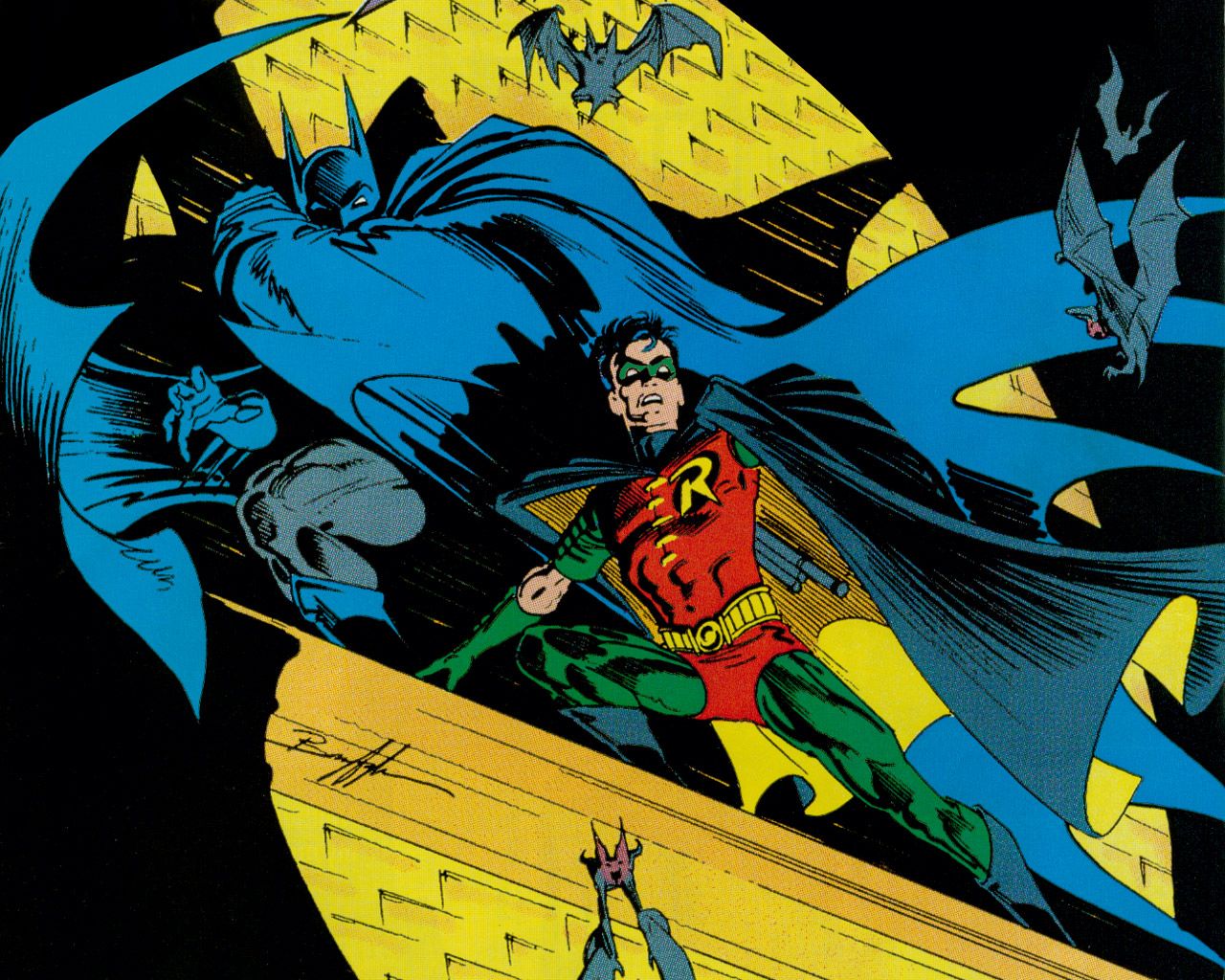
Reeves has recently given us some hints as to the scope of this film, that it will have several members of Batman's iconic Rogues Gallery. With that in mind, I feel like this movie will serve to humble The Batman with a particular purpose in mind, Batman taking in Robin. While it has certainly been done on the film before, it was no picnic as Joel Schumakers Batman: Forever and Batman & Robin are blights on both Batman and the comic book movie genre in general. Properly depicting the relationship of Batman and Robin are I feel the only route that Reeves could do with a trilogy given the age he is looking for with his Batman.

This doesn't count for much, and this is purely conjecture, so please DO NOT take this as gospel, I have no sources to back this up as fact, only my own deductions based off of Reeves' statements in interviews as well as how I would envision to do the film myself. That being said, I am going to take a stab at how I personally believe this film is going to or should go:
I feel that the film is going to start off with Batman being about 5 years or so into his carrer as Batman. This will give him ample time to have been established and have quite a few members of his Rogues gallery established as well. For the most part he has the criminal element of Gotham on the ropes and they are all terrified of him which has given way to Bruce become a bit more wreckless and arrogant. The members of his Rogues will more than likely be brought together by one of the big names in the gallery (if reports are correct I would bank on this being the Penguin). Throughout the film Alfred is going to be pressuring Bruce into either dialing back his nighttime activities or at the very least look into recruiting a partner to have his back, but Bruce pushes back, that what he does is needed and that he doesn't need someone slowing him down. However, throughout the film Batman is in a two way man hunt that puts all his abilities to the test. His villains have declared open season on bats in Gotham and with all his enemies working together on a unified front, Bruce has to find a way to dissolve this deadly alliance and bring down the head of the operation (again I would assume this would be Penguin). By the end of the film, Bruce will have barely been able to stop this threat and the experience will humble him and it would close with Bruce confiding in Alfred that he was right, Bruce can't do this alone forever and that he's going to keep an open mind to bringing in a partner. The end of the film should then be a post credit scene that shows the crime scene of the Death of the Flying Graysons and Bruce Wayne meeting Dick Grayson.
Matt Reeves has talked a lot about exploring avenues of Batman that have not been explored before, and probably the biggest of those avenues to be explored is the role of mentor and father to the Robins. While Robin has appeared in movies before, they really give this dynamic the short end of the stick as Robin in the Schumaker films already had the skill sets needed to be Batman's sidekick (which by the way is ridiculous). This is a golden opportunity to show both Bruce at his most empathetic as a man still stuck in a single moment in his childhood (the death of his own parents), while also showing his brutal side as a trainer. Bruce does not hold back on these kids at all. Most people would hold back when training a kid, but not Bruce. His logic is: "The thug in the alley isn't going to, so why would I. Train like you fight!" Given Reeves' statements a few months ago on the dual nature of the character, comparing him to Jekyll and Hyde, I really feel like Bruce's relationship with the Robins is the perfect example of this.


To reiterate again, this is not something I can prove, so I hope that this isn't blown out of proportion as a rumored report. I have no sources, I am just making my own deductions based off of what has been said, what has been done with this character in the past, and what fans would like to see from the character, and as such I feel like it's about damn time for a good Batman and Robin film.


This has been another edition of Comic Relief! I hope you have enjoyed and we will see you again next time!

-Michael